11.7.25 — The Efficiency Audit: Where Your Money Leaks (and How to Fix It)
11.07.2025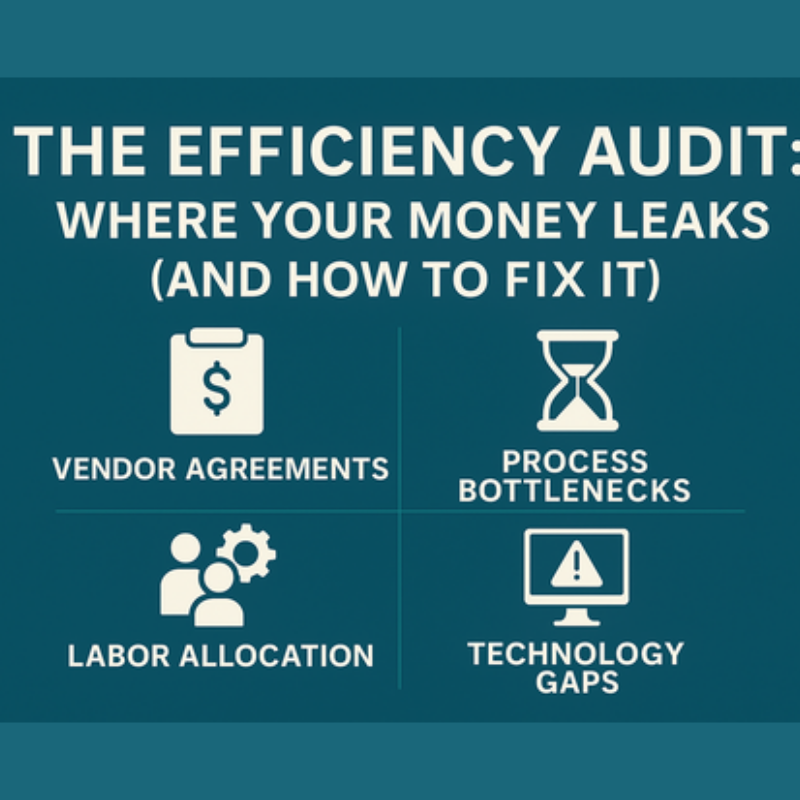
Operational Efficiency Series — Part 1 of 3
By Alan Gaul, VP., Marketing & Brand, TASI Bank
Running a business in today’s high-cost environment means every dollar must have a purpose — and every process must pull its weight. The smartest companies aren’t just cutting costs; they’re diagnosing why costs exist in the first place.
This is where an Efficiency Audit becomes your superpower.
At TASI Bank, we see this daily: the businesses that thrive are the ones that pause long enough to understand their leaks — then patch them with intention and strategy, not panic.
1. Vendor Agreements: The Hidden Cost Creep
It always starts small — a small renewal, a slight uptick, a fee that wasn’t there last year.
Then suddenly:
- Your insurance premiums climbed 12%
- Your waste management contract auto-renewed
- Your software subscriptions increased mid-year
Most businesses never renegotiate.
Your Efficiency Audit should.
2. Process Bottlenecks: The Slow Drains on Productivity
Ask your team one simple question:
“What slows you down every week?”
The answers will reveal your bottlenecks:
- Manual reporting
- Re-entering the same data twice
- Approval workflows with too many hands in the pot
Customer onboarding delays
These aren’t annoyances — they’re profit leaks.
3. Labor Allocation: The Silent Efficiency Factor
You don’t always need more people — you often need your current people focused on the right things.
- Too much admin work? Automate.
- Too many meetings? Streamline.
- Repetitive tasks? Delegate or digitize.
Productivity improves when responsibilities match strengths, not habits.
Actionable Takeaways
- Conduct a line-by-line vendor review every 6 months
- Interview team members about bottlenecks — they know where time is lost
- Map workflows visually and remove 1–2 unnecessary steps
- Identify repetitive tasks that could be automated
TASI Takeaway
Before you cut — understand.
Before you grow — strengthen.
The Efficiency Audit is the first step to running a tighter, faster, more resilient operation.